The similary to Sherlock Holmes from Arthur Conan Dyole and the Detective Conan


Sherlock Holmes is a fictional character created by Sir Arthur Conan Doyle. Sherlock Holmes is a detective that is known for his intelligence, his skill in the use of observation and his deductive reasoning to solve difficult cases.


Shinichi Kudo is a famous young detective that is undoubtedly due to his intelligence and acuity that it can be known as a detective by vocation who help selflessly to the police in the more difficult cases.


Now you may ask, what is the relation between Shinichi Kudo and Sherlock Holmes? Well, the relationship is the father of Kudo Shinichi was the author of Sherlock Holmes. In the history of Detective Conan, Shinichi gets into a child of 7 years because he was poisoned. After this, he went to his teacher to explain everything and Ran (his childhood friend) also went to the teacher because she was concerned by Shinichi. Shinichi (since she doesn't recognize him) got glasses and invented a new name: Conan Edogawa. This name came from the names of Arthur Conan Doyle (his father) and Ranpo Edogawa (Japanese name of Edgar Allan Poe).
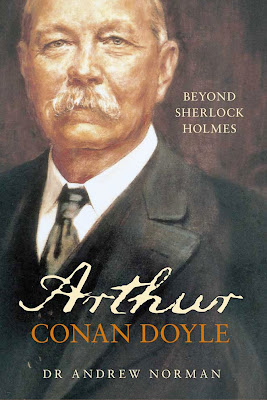
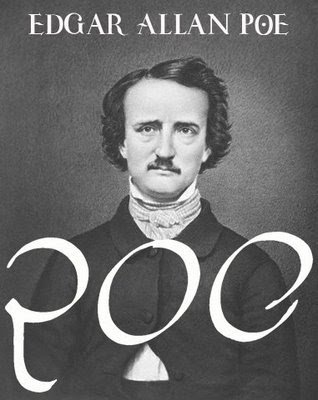
With all this, I want get that there is a relation into Shinichi Kudo and Sherlock Holmes and this is the author of the Sherlock Holmes is in Shinichi's father.

Comentaris

I put this comentaris

http://pauladsc.blogspot.com/2012/03/blog-post.html


My CI

The Intelligence Quotient (IQ) measured intelligence. Intelligence is the speed with which someone is able to acquire knowledge and experiences. I am extremely intelligent. It could say that my IQ is at 1% of the population who are geniuses or gifted.

In he graph there are four zones. Those with an IQ between 85 and 115 are almost 68% of the population. The other areas are those with an IQ between 70-85 and 115-130 of these are 14% each. The 70-80 are less ready than most people and 115-130 are smarter than most. Is then two areas. That of an IQ below 55 and an IQ of more than 145.0.1% of the population has an IQ of less than 5 and 0.1% have an IQ higher than 145. I have an IQ level of 145 !

The IQ has three types of components: the visual-spatial component, the component verbal and logical, and mathematical-numerical component.

Visual-spatial component

I answered 10/10 questions right in the visual-spatial component. I have a strong visual memory and artistic inclinations. I have a good sense of direction and good hand-eye coordination.

The verbal-logical component

I have answered 4/5 questions well in the verbal-logical component. I have a high level of verbal intelligence. I'm good to read, write, memorize .. I am also skilled at explaining, teaching, speaking persuasively. I have a high ability to understand and manipulate syntax and strcuture.
I ranswered 5/5 questions right in the logical component. I have an outstanding ability to dominate reasoning and logical thinking and strategy.

The numerical-mathematical component

I answered 5/5 questions right. I have ability in mathematics, programming and other numeric. I am an organized, accurate and recognition of excel in pattern.

SELF-AVALUATION

PRESENTATION

Do you use any resources: powerpoint, video, images, sound, real material…?

Yes we use the powerpoint with images, videos and sound

Are the resources relevant and attractive and focused on the topic?

Yes

Do they support your presentat?

Yes

Is the timing 5-7 minutes?

Yes

BODY LANGUAGE AND EYE CONTACT

Are you looking at your audience most of the time?

No

Are you reading occasionally from your notes?

No

Are you doing any gestures / movement to hold the attention of the audience?

Yes

STRUCTURE

Do you organize your ideas in order of importance?

Yes .

Do you use discourse markers to make your ideas more clear? (First, then, secondly, on the one hand, on the other, finally…)

Yes and No. I use them but not in all the presentation

CONTENT

Do you introduce interesting, NEW information to your audience?

Yes

Is your information detailed and clear? Do you give / show examples?

Yes and show examples

Is your information copied from a source or is it original?

It is original

Did you look up information/facts/ideas in the Internet/books…?

Yes because for it do the research project you need them.

LANGUAGE

Is your grammar correct, complex? (verbs, word order, tenses learnt in class)?

I suppose that yes.

Is your vocabulary rich and varied (synonyms, idioms, phrasal verbs, expressions, topic-related vocabulary…)?

Yes

Do you use sentence linkers? (and, but, moreover, also, furthermore, although, however…)

More or less

Do you use pause fillers? (well, you know, for example, one second, repeating a word…)

No

PRONUNCIATION & INTONATION

Do you know how to pronounce all your words?

Yes, but in the oral presentation I'm not tell words perfectly.

Did you check the pronunciation with a dictionary, a classmate or the teacher?

With dictionary and with a programme to speak english.

Do you change your tone of voice or use a monotone tone all the time?

I change my tone of voice because I was very nervious.

Did you speed in a fluid continuum or with breaks and interruptions?

With breaks and interruptions.

Emotional Intelligence

Emotional Intelligence is not something with you're born, but rather to develop with the experience and education. It is much easier to increase emotional intelligence than IQ or change personality.
The emotional quotient measures your level of emotional ability. It measures your ability to understand your emotions, control your reactions animals, motivate, understand social situations and communicate with others.
My overall emotional quotient is 113. The emotional quotient is divided into different components: Self-awareness, self management, social awareness and relationship management.

Self-awareness
Self-awareness is the component that measures the ability of the consciousness of your emotions. I have a level of self-awareness of 114. My conscience is high. Rarely I have negative emotions without realizing them and I know the reasons of my emotions. I am also very aware of my thoughts and how to talk to myself.

Self management
Self-management measures the ability to control the emotions. I have a level of self-management of 123. I am not a slave to my emotions. I can hold my negative emotions. I am also able to actively change their emotions. I can change my emotions changed my mental approach and my physiology.
When I faced with adversity and challenges, I saw a high level of optimism and a confidence in myself.

Social awareness
Social Awareness measures the ability to understand others. My skill level is 91. I have trouble to know what other people are thinking and feeling. Often, I'm not aware of the motivation behind the decisions and actions of others.

Relationship management
Relationship Management measures the ability to express emotions. My skill is 98. I can express my strong emotions, but sometimes, you can restrict the emotional expression. My skills of communication are high. Usually I'm able to adapt the way to communicate properly. Using my skills of communication, usually I able to achieve my goals.

Bruno Mars - Rest of My Life


Everyday I Wake Up Next To A Angel / Tots els dies desperto al costat d'un angel
More Beautiful Than Words Could Say /Més bell que les paraules podrien dir
They Said It wouldn't Work But What Did They Know / Van dir que no anava a funcionar, però què sabien ells
Cause Years Passed And We're Still Here Today /Perquè van passan anys i nosaltres encara estem aquí avui
Never In My Dreams Did I Think That This Would Happen To Me / Mai en els meus somnis vaig pensar que això em passaria a mi.

As I Stand Here Before My Woman /Com estic aquí davant de la meva dona
I can't Fight Back The Tears In My Eyes / No puc aguantar les llagrimes en els meus ulls
Oh How Could I Be So Lucky /Oh, com puc ser tan afortunat?
I Must be Done Something Right / Jo haig de fer una cosa bé
And I Promise To Love Her For The Rest Of My Life /I jo prometo estimar-la per la resta de la meva vida.

Seems Like Yesterday When She First Said Hello / Sembla que era ahir quan ella per primera vegada em va dir hola
Funny How Time Flys By When You're In Love /És curiòs com vola el temps quan estàs enamorat.
It Took Us A Lifetime To Find Each Other / Es va portar tota la vida trobar a l'altre
It Was Worth The Wait Cause I Finally Found The One / Va valer la pena esperar perque jo al final vaig trobar l'un.
Never In My Dreams Did I Think That This Would Happen To Me / Mai en els meus somnis vaig pensar que això em passaria a mi.

As I Stand Here Before My Woman /Com estic aquí davant de la meva dona
I can't Fight Back The Tears In My Eyes / No puc aguantar les llagrimes en els meus ulls
Oh How Could I Be So Lucky /Oh, com puc ser tan afortunat?
I Must be Done Something Right / Jo haig de fer una cosa bé
And I Promise To Love Her For The Rest Of My Life /I jo prometo estimar-la per la resta de la meva vida.

The inference rules

The inference rules are the basic rules of logical calculs of deductive reasoning. It is elementary logical operations.
A rule of inference is a scheme for constructing valid inferences.
These schemes provide syntactic relations between a set of formulas called premises and an assertion called a conlusion.
These syntactic relations are used in the inference process, which leads to new true assertions from others already known.
As mentioned, the application of an inference rule is a purely syntactic. However, it should also be valid. For the requirement of preserving the validity makes sense, we need some form semantics for assertions and inference rules of inference rules themselves.
There are a diferents inference ruls, specifically there are six inferences ruls: modus ponens, modus tollens, syllogism, dilemma, reductio ad absurdum and syllogism disjoint.
The inference rules are not explained why I think it is not necessary.